
Hiding Debug Output When You Submit a Solution
, 3 min read

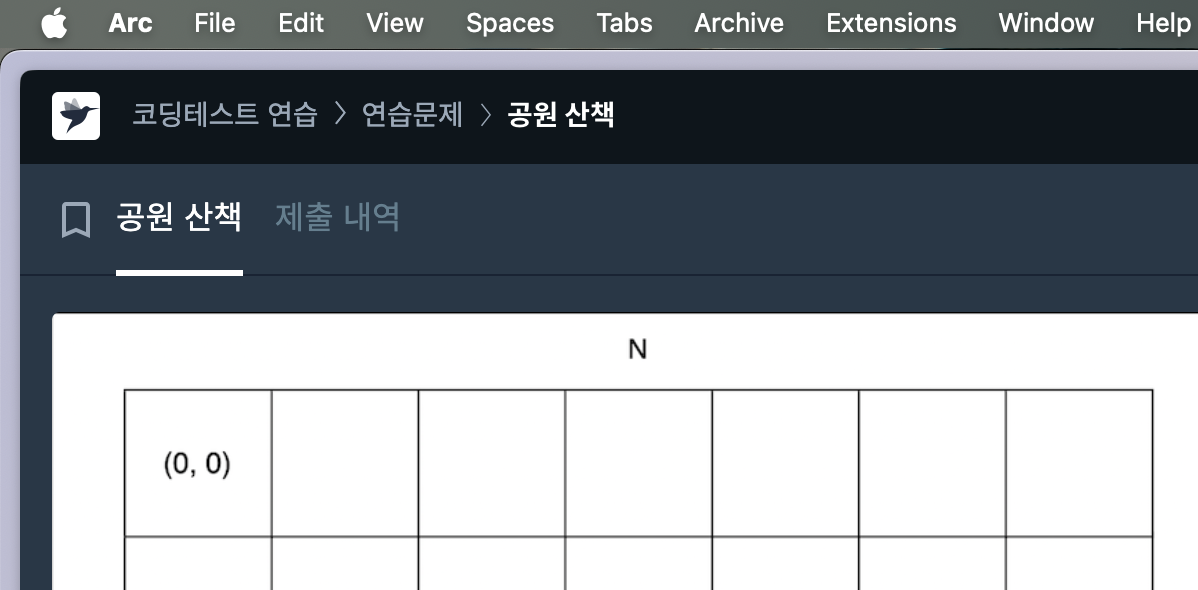
The examples are in Java, taken from my solution to Park Walk on Programmers.
What you’ll take away
When a problem gets confusing, you can print as much intermediate state as you need
and still keep those lines out of the output the judge sees.
The short version
Define the print(String format, Object... args) helper below and use it wherever you want to inspect a value.
// Example 1
print("Can move? now=%s(%d, %d)%n", mat[x][tempY], x, tempY);
print("Move allowed! now=%s(%d, %d)%n", mat[x][tempY], x, tempY);
print("Move (Y): %d -> %d%n", y, tempY);
// Example 2
print("=== step %d (start_%s) | oper_%s ===%n", count++, start, oper);


public static final boolean DEBUG_MODE = false;

private static void print(String format, Object... args) {
    if (DEBUG_MODE) System.out.printf(format, args);
}
What I was struggling with
I kept getting my bearings wrong at first: how far did I need to search, and from which starting point? I wanted to see the intermediate results, so I started with plain System.out.println() calls.
I soon got tired of typing the same output method over and over and joining strings with + just to inspect a value. I wrote print() to take care of both.
private static void print(String format, Object... args) {
    System.out.printf(format, args);
}
- A short helper takes care of typing the same method repeatedly.
printf()and the varargs parameterObject... argstake care of assembling debug messages with string concatenation.
An excerpt from my solution
    public static char[][] mat = new char[55][55];
    public static int ROW_SIZE;
    public static int COL_SIZE;

    public int[] solution(
        String[] park, // Each cell contains S, O, or X.
        String[] routes // Commands for the dog, in the form "op n": direction and number of squares
    ) {
        ROW_SIZE = park.length - 1;
        COL_SIZE = park[0].length() - 1;

        Pos start = new Pos();
        print("<ROW_SIZE=%d, COL_SIZE=%d>%n", ROW_SIZE, COL_SIZE);
        for (int row = 0; row < ROW_SIZE + 1; row++) {
            for (int col = 0; col < COL_SIZE + 1; col++) {
                char target = park[row].charAt(col);
                mat[row][col] = target;
                if (target == 'S') start = new Pos(row, col);
            }
        }

        for (int row = 0; row < ROW_SIZE + 1; row++) {
            for (int col = 0; col < COL_SIZE + 1; col++) {
                print("%s ", mat[row][col]);
            }
            print("%n");
        }

        int count = 1;
        for (String oper : routes) {
            print("=== step %d (start_%s) | oper_%s ===%n", count++, start, oper);
            if (start.canMoveTo(oper)) {
                start.move(oper);
            }
        }

        int[] answer = {start.x, start.y}; // Dog’s final position after all commands: [row, column]
        return answer;
    }